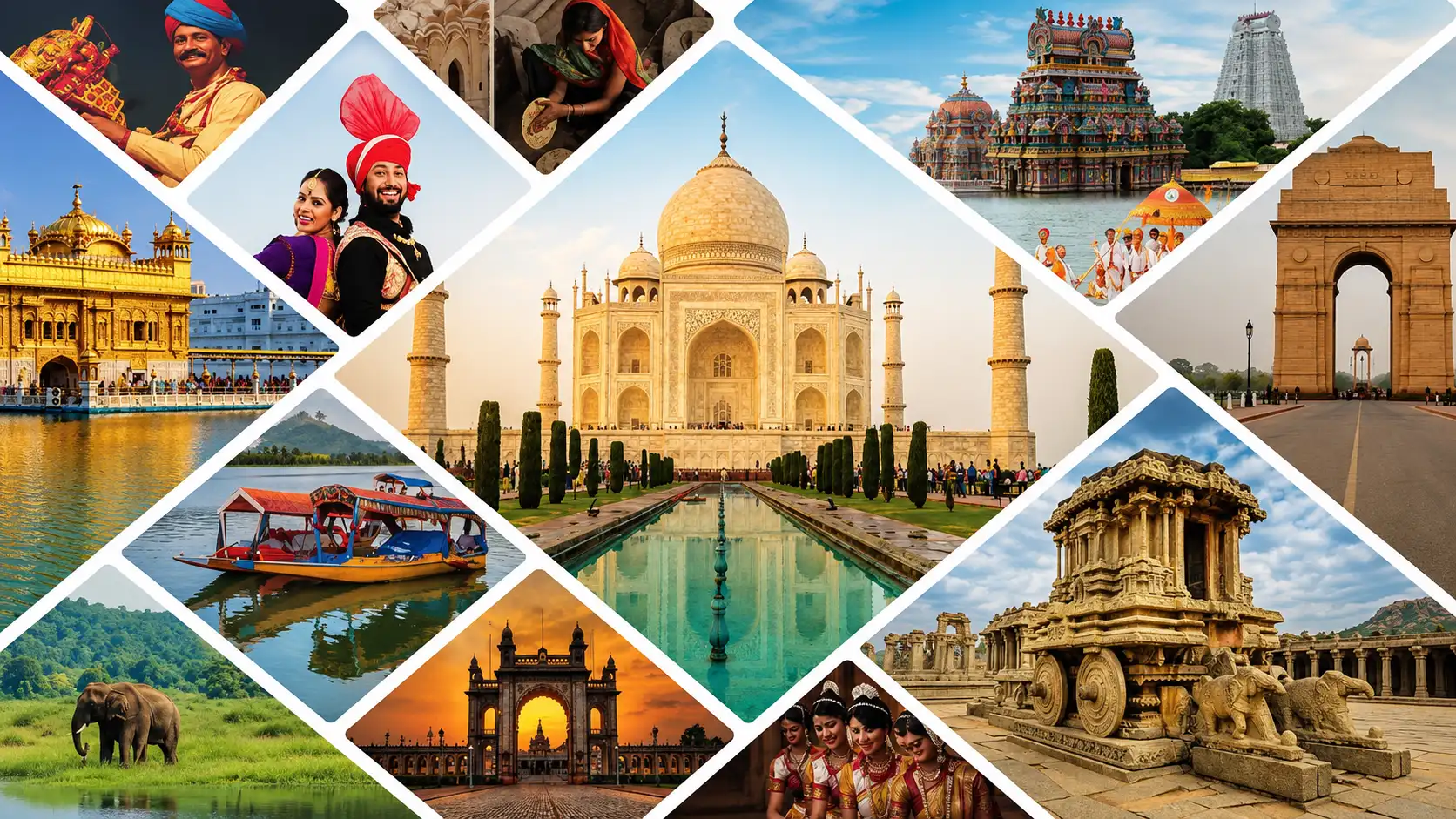
In a world where travellers scroll past dozens of destinations before breakfast, a pretty postcard is no longer enough. Indian states have understood this better than most. Over the past two decades, they have moved from listing monuments and beaches to building living brands—complete with emotional hooks, signature phrases, and stories that linger long after the trip ends. The result is one of the most dynamic destination-marketing landscapes in the world, constantly refreshed by new campaigns that keep pace with changing traveller behaviour.
Why Tourism Branding Matters More Than Ever
Tourism is no longer a soft sector; it is fierce competition for attention, investment, and jobs. Global travellers choose between hundreds of destinations that look similar on Instagram. Domestic travellers, empowered by better roads, cheaper flights, and rising disposable income, hop between states with increasing ease. In this crowded marketplace, the states that cut through are those that have invested in clear, consistent, and emotionally resonant brands. Branding is no longer decoration; it is strategy.
Beyond Destinations: The Rise of State Tourism Brands
The old model was simple: photograph the fort, list the temple, mention the beach. The new model treats the state itself as the product. Kerala is not a collection of backwaters and hills; it is “God’s Own Country.” Rajasthan is not a string of palaces; it is an invitation to live like royalty. Madhya Pradesh is not a map of wildlife parks and temples; it is “Ajab Hai, Sabse Gajab Hai.” Assam is not just tea gardens and rhinos; it is “Awesome Assam.” These brands package geography, culture, and aspiration into a single, memorable idea. Travellers no longer just visit places—they buy into identities.
Kerala’s Blueprint for Global Destination Branding
Few campaigns in Indian tourism have achieved the staying power of Kerala’s “God’s Own Country.” Launched in the late 1990s, the phrase did more than describe the landscape; it positioned the state as a near-spiritual experience. The campaign combined lush visuals of backwaters, Ayurveda, and monsoon greenery with a tone of quiet confidence. It spoke to the global traveller seeking authenticity and rejuvenation rather than spectacle.
Decades later, the line still works because it is true, distinctive, and emotionally precise. Kerala continues to evolve it. In 2025, the state launched the
“Come Together in Kerala”
campaign, specifically targeting urban families seeking to disconnect from hectic routines and reconnect in the state’s serene settings. The campaign won the Silver Star in the Campaign International category at the Golden City Gate Awards 2025 and further recognition at ITB Berlin. Alongside it, Kerala Tourism released a digital festival calendar for 2025-26 featuring 101 cultural events, complete with multimedia elements, making the state’s living culture easier to discover and plan around. Kerala proved that a well-chosen idea, sustained and refreshed over time, can turn a regional destination into an international brand.
Rajasthan’s Art of Selling Heritage and Grandeur
Rajasthan sells an emotion as much as a place: the feeling of stepping into a living fairy tale. Its campaigns lean heavily on heritage architecture, vibrant festivals, desert landscapes, and the romance of royal hospitality. Luxury storytelling sits at the centre—palace hotels, heritage walks, and carefully curated cultural experiences. The state understands that many travellers come not only to see history but to temporarily inhabit it. By wrapping its rich past in contemporary luxury and spectacle, Rajasthan has made heritage feel both accessible and aspirational. Recent digital and experiential pushes continue to keep the royal narrative fresh for new generations of travellers.
Gujarat’s Journey from Regional Attraction to National Tourism Powerhouse
Gujarat’s transformation is a case study in deliberate repositioning. Once known mainly for its industrial strength and a handful of religious sites, the state used strategic campaigns, infrastructure investment, and high-profile celebrity associations to expand its appeal. The “Khushboo Gujarat Ki” campaign, famously featuring Amitabh Bachchan, highlighted diverse experiences—from the white desert of Kutch and the lions of Gir to the vibrant culture of its festivals. Celebrity endorsements amplified reach, while consistent messaging reframed Gujarat as a destination of colour, history, and adventure rather than a purely business or pilgrimage stop.
Plans for “Khushboo Gujarat Ki 2.0” have kept the brand in active conversation, aiming to showcase newer attractions developed over the past decade and refresh the fragrance of Gujarat for contemporary audiences. The result has been a measurable rise in both domestic and international arrivals.
Madhya Pradesh and the Power of a Memorable Tourism Platform
“MP Ajab Hai, Sabse Gajab Hai”
remains one of the most successful Indian tourism taglines of recent years—catchy, playful, and instantly ownable. The campaign refused to sell Madhya Pradesh as a single-note destination. Instead, it showcased the state’s sheer variety: tiger reserves, ancient temples, tribal culture, and lesser-known natural wonders. The tone was light, confident, and slightly cheeky, which helped the brand stand out in a category often dominated by solemn heritage messaging. The platform gave the state a personality and turned curiosity into consideration, a formula that continues to guide its promotional efforts.
Assam’s Awesome Narrative: Nature, Tea and Living Culture
Assam has carved its own distinctive space with the “Awesome Assam” brand, launched in 2016. The campaign positioned the state as a land of living nature and cultural depth—home to the one-horned rhinoceros of Kaziranga, vast tea estates, the world’s largest river island Majuli, river cruises on the Brahmaputra, and rich tribal and satra traditions. Celebrity association, notably with Priyanka Chopra, helped amplify its national and global visibility in the early years.
Recent efforts have sharpened the focus on experiential and niche tourism. Initiatives such as the Assam Tea and Golf Trail, tea tourism guidelines, homestay schemes, and promotion of concert tourism aim to attract higher-value travellers while supporting local communities. Growing interest in destinations like Jorhat and Majuli reflects the brand’s success in moving beyond wildlife alone to tea heritage, river life, and authentic cultural immersion. “Awesome Assam” continues to sell not just places, but a sense of discovery and natural abundance.
Other States Joining the Branding Race
Newer and refreshed campaigns are emerging across India. Goa has leaned into “Feels Like Goa” messaging for seasonal and year-end pushes, capitalising on its lifestyle appeal. Uttar Pradesh has sharpened its focus on spiritual and cultural circuits, with Gen Z-oriented creative initiatives launched around National Tourism Day 2026 and massive visibility from events such as the Prayagraj Mahakumbh. Himachal Pradesh is prioritising eco-tourism development, announcing plans for dozens of new sustainable sites while aligning with national pushes for mountain trails. These efforts show that branding is no longer limited to the traditional tourism powerhouses.
Social Media’s Influence on the Modern Traveller
Official campaigns still matter, but travellers now trust other travellers more. Reels of monsoon train journeys through the Western Ghats, drone shots of Rann of Kutch under a full moon, or food tours through Lucknow’s lanes often outperform polished advertisements. States that encourage and amplify user-generated content, collaborate with creators, and make their destinations “reel-ready” gain organic reach that paid media struggles to match. Social platforms have turned every visitor into a potential brand ambassador—and the smartest tourism boards treat them as such.
From Sightseeing to Storytelling: The Rise of Experiential Tourism
The modern Indian tourist increasingly seeks immersion over checklists. States have responded by marketing experiences rather than monuments alone: spice trails and Ayurveda in Kerala, folk performances and desert camps in Rajasthan, wildlife safaris and tribal homestays in Madhya Pradesh, spiritual circuits in Uttar Pradesh, and beach-plus-lifestyle packages in Goa. Cuisine, wellness, adventure, and living culture have become central to the pitch. The shift reflects a broader truth—people remember how a place made them feel far more than how many sites they ticked off.
What Makes a Tourism Campaign Truly Iconic?
The campaigns that endure share a few traits. They are rooted in something authentic rather than invented. They use language that is simple, distinctive, and emotionally charged. They remain consistent over years instead of reinventing themselves every season, while still allowing room for timely refreshes like Kerala’s “Come Together” or Gujarat’s evolving “Khushboo” narrative. They work across media, from television and print to social and experiential activations. And they leave room for the traveller to complete the story. Iconic campaigns do not just describe a destination; they invite people into a world.
The Next Chapter of Indian Tourism Marketing
The next phase will be shaped by three forces. Technology—augmented reality guides, personalised itineraries, digital festival calendars, and data-driven targeting—will make discovery more precise. Sustainability will move from footnote to central claim as travellers demand responsible options, a direction already visible in Himachal’s eco-site push and national trail initiatives. And hyper-local narratives will gain ground: smaller towns, lesser-known festivals, and community-led experiences will receive more attention as travellers seek authenticity beyond the famous circuits. States that can combine big-brand consistency with granular, authentic storytelling will lead.
Key Lessons for Brands from India’s Tourism Success Stories
Marketers outside tourism can learn a great deal from these campaigns. First, a strong, ownable idea beats a long list of features. Second, consistency compounds—Kerala’s slogan has worked for decades because it was never abandoned, only refreshed. Third, emotion and identity often outsell pure information. Fourth, the audience is no longer passive; co-creation with creators and travellers multiplies reach. Finally, the most powerful brands feel true. When a destination’s marketing matches the lived experience, the brand becomes self-reinforcing.
Indian states have shown that tourism branding is not about selling landscapes. It is about selling belonging, wonder, and the promise of a different self. In doing so, they have not only filled hotel rooms and flights; they have given travellers stories worth telling. And in the attention economy, that is the ultimate competitive advantage.
From heritage and culture to wildlife and wellness, Indian states are redefining tourism marketing through compelling brand narratives and creative campaigns that continue to evolve with every new season and every new reel.