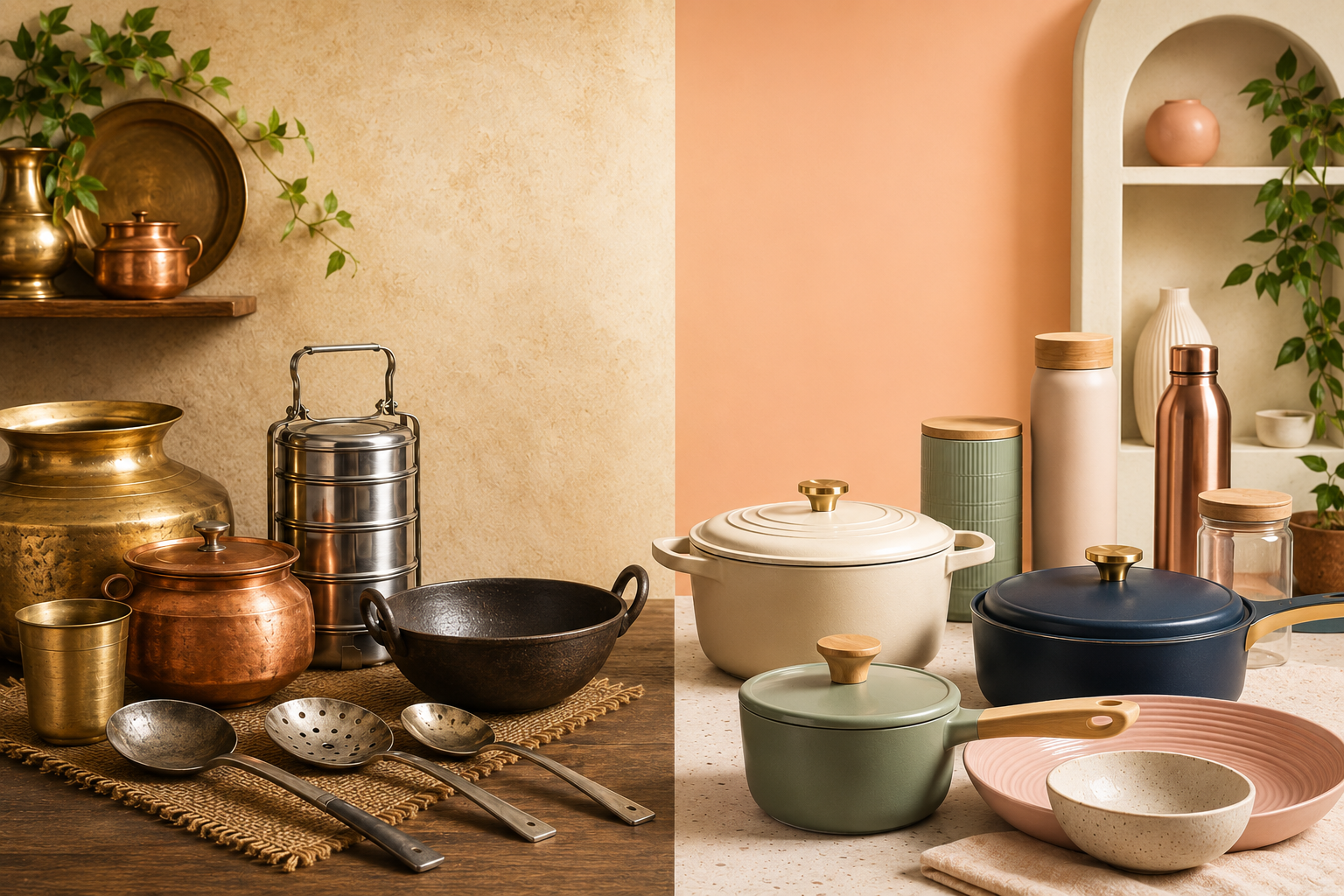
For decades, the Indian cookware and kitchenware industry was driven more by functionality than by branding. A pressure cooker was bought because it was durable. A kadhai was chosen because it lasted for years. Stainless steel utensils represented trust, strength and value. The category was largely dominated by traditional utensil markets, local manufacturers, wholesalers and unorganized players. Purchase decisions rested on price, weight, availability and personal relationships with shopkeepers. Across cities, towns and villages, consumers often bought kitchen products from trusted local sellers who had served generations of families. The bond between customer and seller was built on familiarity rather than brand loyalty.
A Shift Toward Lifestyle and Identity
The Indian kitchen landscape is now undergoing a clear transformation. Cookware is no longer just a functional necessity. It has become a lifestyle statement. Modern consumers look beyond durability and affordability. They consider design, health benefits, technology, convenience, and aesthetics. A kitchen is no longer only a place where food is prepared. It has become an important part of home identity. Young couples setting up new homes, urban families upgrading their kitchens, and health-conscious buyers increasingly seek products that match their lifestyle and values.
Steady Market Growth and Changing Preferences
The Indian cookware, kitchenware and homeware market has seen steady growth. Rising disposable income, urbanization, nuclear families, premium housing trends and the rapid expansion of e-commerce have all played a role. Demand has grown for stainless steel cookware, non-stick products, ceramic cookware, cast iron solutions, premium serveware and modern kitchen storage. Stainless steel remains one of the most preferred materials because of its durability, hygiene, affordability and deep cultural acceptance in Indian households. At the same time, premium categories have gained momentum as consumers show greater willingness to invest in quality, design and long-term value.
The Opportunity in the Unorganized Sector
One of the biggest opportunities in this sector lies in transforming India’s large unorganized cookware market into organized consumer brands. The unorganized sector still forms a significant part of the Indian kitchenware ecosystem. Thousands of small and medium manufacturers across cities such as Rajkot, Ahmedabad, Moradabad, Delhi, Mumbai and other hubs produce stainless steel utensils, aluminium cookware, brass products, copper utensils and traditional kitchen items. These businesses hold strong manufacturing capabilities, skilled craftsmanship and decades of experience. Many have produced quality products for generations and enjoy solid trust among local consumers.
Strengths and Blind Spots of Traditional Manufacturers
The biggest strength of the unorganized market is its manufacturing expertise and cost advantage. These manufacturers understand Indian cooking habits, regional requirements, and consumer expectations better than many new entrants. They know the importance of product durability, preferred sizes and traditional cooking methods. Yet despite strong production capabilities, many of these businesses remain invisible. They lack modern branding, packaging innovation, digital presence and consumer communication. Their products may be good, but their stories remain untold.
This gap represents one of the largest branding opportunities in India’s consumer market. The next phase of growth will come from converting traditional manufacturers into powerful kitchen lifestyle brands. Just as textiles, dairy, jewellery and furniture moved from unorganized businesses into trusted brands, the cookware industry is now moving in the same direction. The future will belong to companies that combine manufacturing strength with strategic branding, marketing and consumer engagement.
From Selling Products to Building Brands
The cookware industry is shifting from product selling to brand building. Earlier, consumers chose utensils mainly on price, size, and durability. Today, brands need to sell an experience. The conversation has moved from “How strong is the steel?” to “How does this product improve my lifestyle?” Consumers want cookware that stands for health, convenience, design, sustainability and emotional connection. A successful brand will communicate not only the quality of its material but also the memories, traditions and experiences linked to cooking.
Lessons from Established Brands
Leading Indian cookware brands have already shown the power of branding. TTK Prestige built its position through trust, innovation and household familiarity, becoming a reliable kitchen partner for millions of families.
Hawkins Cookers created a strong identity through safety, engineering excellence and product credibility. Borosil expanded beyond glassware into cookware, storage and kitchen solutions by creating a modern lifestyle positioning.
Wonderchef changed the perception of cooking by presenting it as an enjoyable lifestyle experience rather than a daily task. Through celebrity associations, recipe content, influencer marketing and digital storytelling, the brand built aspiration around cooking.
Premiumization and the Role of Design
Future growth of the Indian cookware market will be driven by premiumization and emotional branding. Consumers are moving toward healthy cooking solutions such as cast iron, ceramic, chemical-free products, copper and brass cookware, and premium stainless steel ranges. Alongside functionality, design is becoming an important purchase factor. Modern consumers want products that look beautiful in their kitchens, can be proudly displayed, and form part of their home décor.
What Traditional Manufacturers Must Do
For future cookware and homeware brands, branding strategy will become as important as manufacturing quality. Traditional manufacturers will need to create strong brand identities, invest in premium packaging, develop digital platforms, and build emotional stories around their products. A manufacturer selling a simple stainless steel utensil set can transform itself into a premium brand by communicating heritage, craftsmanship and trust. A brass and copper maker can reposition traditional products as wellness and lifestyle choices. A regional producer can compete nationally through a strong direct-to-consumer strategy.
Digital Marketing and the Power of Packaging
Digital marketing will play a crucial role in this transformation. Recipe content, chef collaborations, influencer partnerships, social media storytelling, and online communities will help brands create deeper relationships with consumers. E-commerce platforms have opened opportunities for regional manufacturers to reach customers across India without relying only on traditional retail networks. A strong online presence, customer reviews, and engaging content can help emerging brands compete with established players.
Packaging will also become a major differentiator. Traditional cookware packaging mainly displayed the product. Future packaging will need to create an experience. Premium visuals, lifestyle photography, cooking inspiration, sustainability messages and QR-based recipe guides can turn packaging into a powerful marketing tool.
Emerging Opportunity Areas
The biggest opportunities in India’s cookware market will emerge in several spaces. These include heritage brands that modernize traditional products like brass, copper and cast iron; healthy kitchen brands focused on clean cooking; premium gifting brands for weddings and special occasions; and lifestyle kitchen companies that combine design, technology and functionality.
The Path Forward
India’s cookware industry stands at the beginning of a major branding revolution. The unorganized sector brings manufacturing strength, craftsmanship and consumer trust. Organized companies bring distribution, marketing and brand-building capabilities. The brands that will win the future will be those that successfully combine both worlds.
India does not need more utensil manufacturers. It needs more kitchen lifestyle brands. The next generation of successful cookware companies will not simply sell steel, aluminium or copper. They will sell trust, health, memories and experiences. The journey ahead is clear: from unorganized utensil markets to organized kitchen lifestyle companies, from manufacturers to storytellers, and from products to powerful consumer brands.
</span><!--EndFragment-->