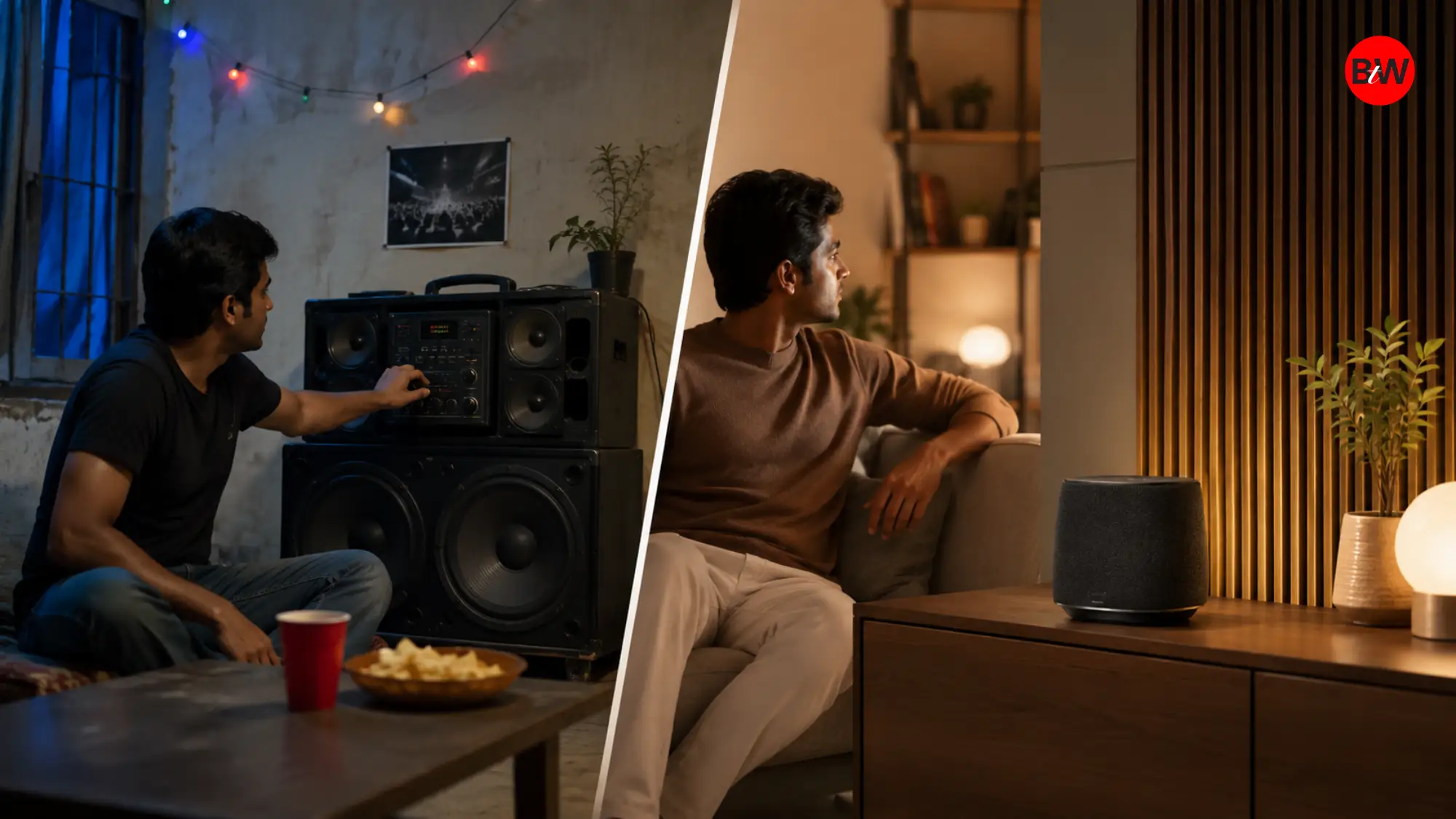
There was a time when buying a speaker in India was almost an engineering exercise. You wanted to know the wattage. You wanted to know the size of the woofer. You wanted to know whether it had enough bass. The bigger the speaker, the more powerful it appeared. Advertising followed the same formula. Large speakers. Larger sound. Deep bass. Thundering music. The promise was simple: make more noise.
That was the old Indian audio market. Today, the speaker can be smaller than a water bottle and yet occupy a much larger place in the consumer's life.
It can sit beside a laptop during a workday, accompany a picnic, become the centre of a house party, sit quietly on a bedside table, or become part of a carefully designed living room. Earbuds have become almost invisible extensions of the consumer. Soundbars have become part of the television experience. Wireless speakers have become lifestyle accessories.
The transformation is bigger than technology. India has stopped buying sound merely to hear better. It is increasingly buying sound to live better. And that change is creating one of the most interesting stories in Indian consumer electronics.
Once Upon a Time, Loudness Was the Brand
Establish the old category mindset around power, bass, volume, and performance, where higher wattage was often equated with a better speaker. Then introduce the smartphone as the turning point that moved music away from traditional music systems and changed the role of audio accessories.
The Earbud Changed the Business
Explain how affordable wireless audio expanded the category and made personal audio younger, more fashionable, and aspirational. The key shift here is from electronics to identity: consumers began asking whether a product looked good, suited them, and reflected who they were.
boAt Didn't Just Sell Earphones. It Changed the Category's Accent.
Use boAt as the first major example of lifestyle-led audio branding. The important point is that boAt made technology culturally relevant through youth, music, fashion, celebrities, and sport rather than relying only on technical specifications.
When Bass Became a Cultural Code
Move from the product to the emotion behind it. Instead of selling frequency response or technical performance, brands began selling the feeling created by sound. Bass became associated with energy, excitement, and youth culture.
Then Came the ₹999 Consumer
This section should explain how affordability democratised the category. Brands such as Mivi, Zebronics and Portronics helped expand the consumer electronics ecosystem, while consumers began expecting premium-looking design and recognisable branding even at lower price points.
Advertising Had to Change With the Consumer
This becomes the bridge from product marketing to brand marketing. Move from the old vocabulary of watts, bass, drivers, and connectivity to style, freedom, energy, youth, expression, and experience. Then introduce celebrity partnerships as a way of transferring cultural meaning to the product.
JBL and Sony: Selling the Experience
Bring JBL and Sony together as examples of brands that moved beyond specifications. JBL can represent sound as experience, while Sony can represent technology becoming desirable through the experience it enables. The Walkman example works particularly well here because the product ultimately represented personal freedom rather than simply hardware.
The Speaker Has Become Furniture
Shift the article from personal audio to the home. Speakers, soundbars and wireless devices increasingly need to coexist with interior design. Colour, texture, shape, finish, packaging and shelf presence have therefore become part of the product's brand communication.
Marshall Understood This Early
Use Marshall as the design-equity example. Its knobs, grille, typography, and amplifier-inspired aesthetic demonstrate how a brand can turn an audio product into a cultural object rather than an anonymous electronic device.
India's Audio Market Is Actually Many Markets
This section should broaden the article from brands to consumers. Rather than treating India as one market, show the different occasions and needs across teenagers, executives, gamers, families, creators, travellers, and fitness consumers. The central idea here is strong: The opportunity isn't simply to grow the audio market. It's to own an occasion.
The Future Brand Will Sell Moments
This should become the article's forward-looking section. Instead of selling 20 watts, a 40-hour battery, or immersive sound, brands can own moments such as the morning commute, college party, family movie night, creator's desk, or weekend road trip.
The Indian Consumer Is Becoming Harder to Impress
Introduce the informed consumer. Consumers now compare YouTube reviews, prices, ratings, battery life, and recommendations before buying. This creates the important distinction: Advertising creates consideration. Experience creates conversion. Reviews create trust.
The Battle Has Moved to the Digital Shelf
Follow naturally from consumer research to the purchase journey. Instagram, YouTube, e-commerce listings, customer reviews, influencers, unboxing, and after-sales service all contribute to the brand experience.
From Product Brands to Trust Brands
This should be one of the strongest business sections. As specifications and prices become increasingly similar, trust becomes the differentiator: durability, warranty, service, repairs, and the confidence that the brand will still support the product in the future.
AI Will Change the Meaning of “Smart”
Move into the future of the category through AI, personalised audio, adaptive sound, translation, noise cancellation and smart-home integration. The larger shift is from hardware to software, ecosystem, intelligence, and experience.
So, What Should Indian Brands Watch?
Bring together the central argument: technology is becoming more sophisticated, but consumers increasingly want it to feel simple, affordable, attractive, and relevant to their lifestyle.
The future of Indian audio will not simply be a battle between wattages, drivers, and battery capacities. It will be a battle for cultural relevance.
Yesterday: “How loud is it?”Then: “How good is it?”Next: “What does it add to my life?”
This gives the article a clean editorial ending and reinforces the central thesis that audio products are moving from gadgets to brands and from specifications to human experiences.
The next Indian electronics winner may not necessarily be the company with the most advanced technology. It may be the company that finds the most powerful human truth around that technology and builds a brand around it.