For decades, cookware has been one of the least glamorous purchases in an Indian household. Consumers spent time choosing the right ingredients and debating cooking oils, but rarely questioned the pots and pans they cooked in.
That, says Bergner India MD and CEO Umesh Gupta, is beginning to change.
As Indian consumers invest more in healthier lifestyles and premium homes, cookware is slowly moving beyond functionality into the realm of health, design and aspiration. Bergner, one of the earliest companies to introduce tri-ply cookware to India, believes the category is at an inflection point, driven by rising health awareness, premiumisation and the rapid growth of e-commerce.
"The Indian consumer has upgraded every part of life: homes, kitchens, cars, furniture and fashion. Why should cookware remain purely utilitarian?" Gupta asks.
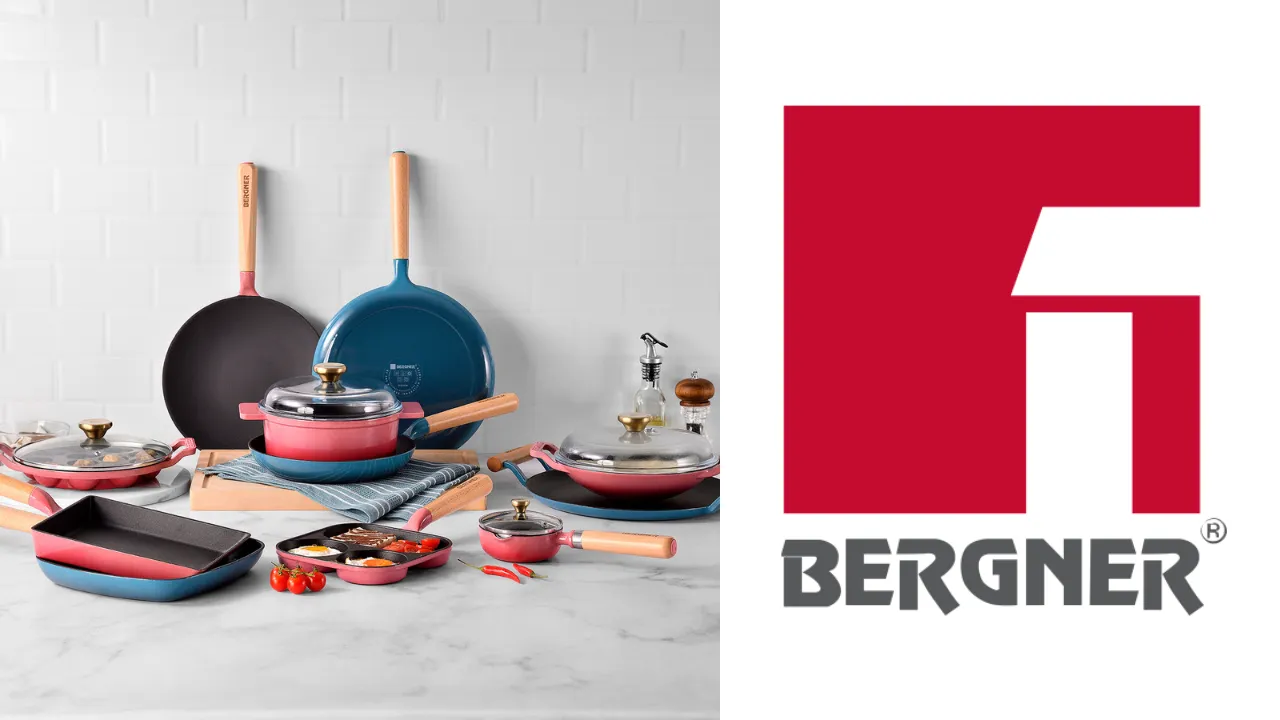
The company's latest launch, Excalibur, reflects that thinking. Introduced earlier this year in collaboration with Michelin-starred chef Vikas Khanna, the enamelled cast-iron collection was positioned not as cookware but as "Fashion for Your Kitchen" as a deliberate attempt to transform cookware into a lifestyle product.
"We wanted to combine health with aesthetics," Gupta says. "Consumers today don't just want products that perform well; they also want products that look beautiful in their homes."
A business born inside a kitchen
Bergner's India journey did not begin with market research but with a family visit.
After spending nearly two decades in Europe, Gupta returned to India and found himself surprised by the cookware in an affluent relative's Mumbai home.
"The cookware was of extremely poor quality. When I asked why they were using it, the answer was simply, 'What's wrong with it?'"
That moment exposed what Gupta believes remains the industry's greatest challenge even today: awareness.
Founded in Vienna in 1999, Bergner entered India in 2007 after Gupta recognised a gap between global cookware standards and what was available locally. The company initially introduced premium die-cast cookware before pioneering tri-ply products tailored specifically for Indian kitchens.
Unlike Western markets, where frying pans dominate, Indian households rely heavily on kadais, tawas, pressure cookers and regional cookware. Bergner redesigned global products for local cooking habits rather than expecting consumers to adapt.
"We didn't make one cookware range for India. We built cookware around how different parts of India actually cook."
/filters:format(webp)/afaqs/media/media_files/2026/07/20/umesh-guptaa-bergner-2026-07-20-20-08-46.jpeg)
Selling a health idea before selling cookware
If convincing consumers to spend more on cookware was difficult, persuading them that cookware could affect their health was even harder.
Gupta says Bergner deliberately chose education over aggressive product marketing.
With campaigns such as Uncoated Aluminium Hatao, Bergner Tri-Ply Lao focused on explaining why cookware material matters. The company also launched BergCast, a podcast featuring chefs and nutrition experts, while partnering with Vikas Khanna and MasterChef India to simplify conversations around cookware safety.
The company's central message is straightforward: people pay close attention to what they cook but rarely think about what they cook in.
Tri-ply cookware, Bergner argues, distributes heat more evenly, requires significantly less oil than conventional cookware and is durable enough to withstand the way Indian households cook.
Gupta estimates that educating consumers will remain a decade-long exercise.
"Consumers in metro cities are becoming more aware, but in Tier II and Tier III markets, awareness is still very low. Building this category requires patience."
The broader market is also moving in Bergner's favour. According to Mordor Intelligence, India's cookware market was valued at $1.87 billion in 2025 and is projected to reach $2.85 billion by 2031, growing at a CAGR of 7.27%.
Rising disposable incomes, rapid urbanisation and stricter BIS standards are accelerating the shift from unbranded cookware to organised players, particularly across metro and Tier II cities.
Gupta believes the government's decision to reduce GST on cookware (12%) and kitchenware (18%) to 5% has further formalised the category, making it easier for organised brands to compete.
Tri-ply has emerged as the fastest-growing premium segment within India's estimated Rs 5,500-crore stainless steel cookware market. According to Gupta, Bergner currently holds around a 20% share of India's tri-ply cookware market. It has grown at a 33% CAGR over the past three years.
Bergner has also benefited from changing cooking habits. With more households adopting induction cooktops, partly driven by the recent LPG supply crunch, the company says demand for its tri-ply cookware has increased, resulting in a 12-15% sales uplift between April and June.
/filters:format(webp)/afaqs/media/media_files/2026/07/20/bergners-channel-strategy-2026-07-20-20-22-14.png)
Why digital became Bergner's biggest growth engine
For much of the cookware industry, distribution has traditionally meant building a large dealer and retailer network.
Bergner took a different route.
Rather than relying solely on general and modern trade, which accounts for 68% of the business, the company leaned heavily into digital commerce, allowing it to educate consumers while simultaneously reaching them across the country.
"Building a traditional offline distribution network takes years," Gupta says. "Digital platforms allowed us to reach consumers much faster."
Today, e-commerce contributes roughly 35% of Bergner India's business, with Amazon accounting for the majority (65%) of those online sales.
For Gupta, the value extends beyond transactions.
He credits Amazon's consumer insights and transparent operating systems with helping Bergner understand where customers are located, what products they are researching and how repeat buying behaviour is evolving. Those insights have, in turn, helped the company identify demand pockets beyond metropolitan India and expand into Tier II and Tier III markets more efficiently.
Digital commerce has been central to Bergner's category-building efforts. Since partnering with Amazon in 2017, the company has used Amazon Ads full-funnel tools, shopper insights and audience targeting capabilities to reach consumers actively researching premium cookware.
Through a mix of video campaigns, influencer-led content and livestream videos featuring chef Vikas Khanna and targeted advertising, Bergner sought to combine consumer education with product discovery. Gupta says Amazon Ads' data and measurement capabilities have also helped the company understand the customer journey, refine its marketing investments and accelerate awareness of tri-ply cookware among Indian consumers, rather than simply drive transactions.
Bergner is closely monitoring quick commerce, which Gupta believes could become another significant growth channel as consumer adoption accelerates, even though e-commerce remains central to its strategy.
Beyond cookware
Cookware, however, is only the starting point.
Bergner's longer-term ambition is to become what Gupta describes as "India's most trusted kitchen solutions brand".
The company is expanding into dinnerware, storage solutions, kitchen tools, appliances and accessories while continuing to design products around regional cooking habits rather than adopting a one-size-fits-all approach.
Over the next five years, Bergner plans to expand its retail footprint to 500 brand galleries while strengthening domestic manufacturing through additional factories.
"Our objective isn't simply to sell premium cookware," Gupta says. "It's to make better kitchens accessible to more Indian households."