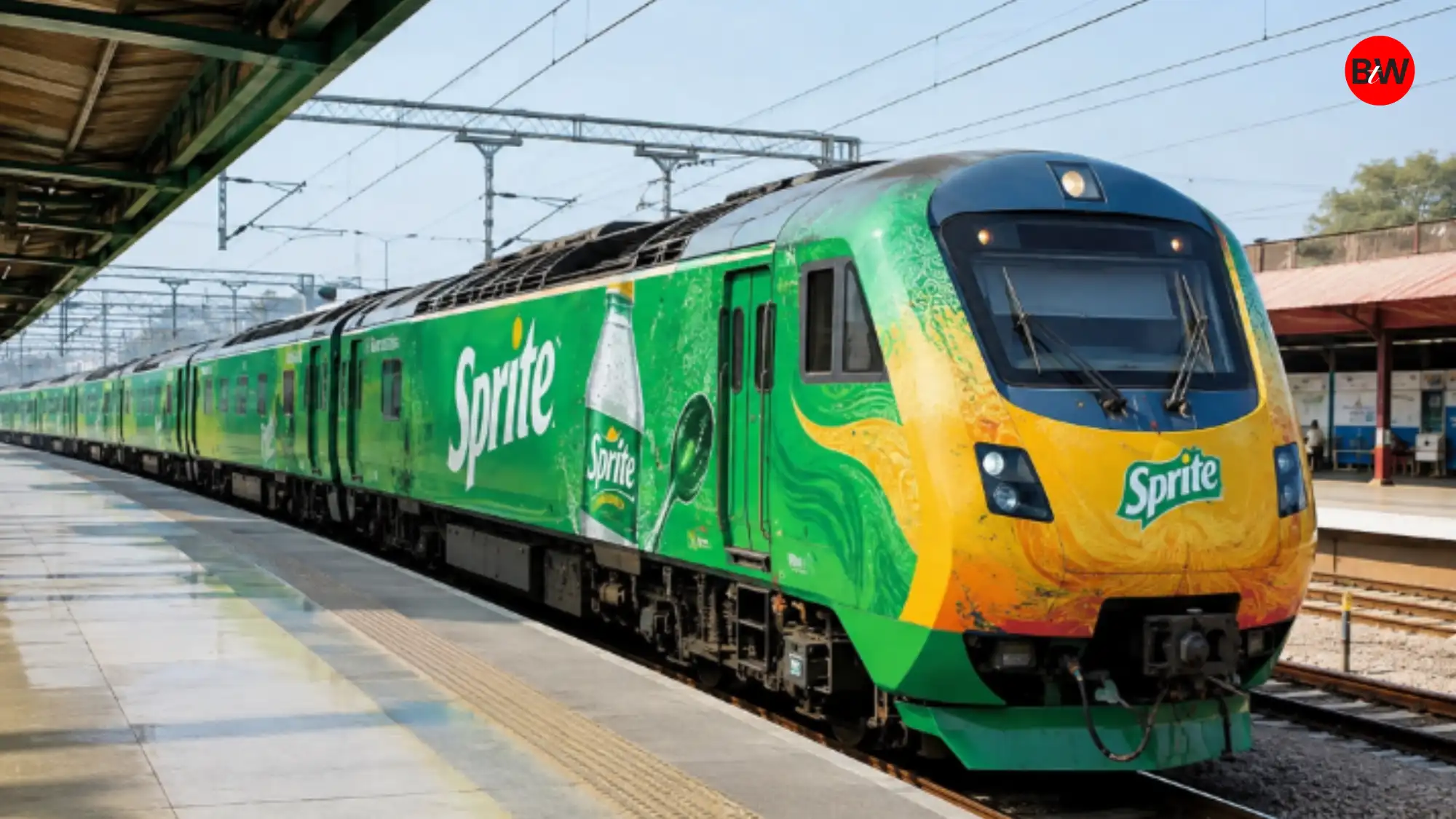
Coca-Cola is taking Sprite branding beyond conventional advertising spaces and onto the tracks, with the company securing branding rights for the Lucknow–New Delhi Tejas Express for 83 days, according to The Times of India.
During the branding period, the train will be called the “Sprite Tejas Express” at Lucknow, Kanpur, Tundla and New Delhi stations, while five LHB coaches will carry Sprite branding. The move effectively transforms the train into a large, moving canvas for the soft drink brand.
From Ad Space to a Moving Brand Asset
What makes the association particularly interesting from a marketing perspective is the scale of the placement. Instead of simply buying advertising space around a train or at a railway station, Sprite is turning the train itself into a moving brand asset.
The execution allows the brand to take its distinctive green-and-yellow visual identity across one of the country's prominent intercity rail routes. The branded coaches can generate visibility not only among passengers but also among commuters, station visitors, and people who encounter the train along its journey.
The strategy also creates opportunities beyond traditional out-of-home advertising. A fully branded train is naturally more noticeable and shareable, potentially encouraging passengers and audiences to photograph and post the experience on social media.
For Coca-Cola, the association demonstrates how brands can use physical infrastructure to create high-impact visibility while turning an everyday travel experience into a branded moment. It also reflects the growing potential of transit media, where trains, metros, airports, and other public spaces are increasingly being used as large-format advertising platforms.
The Lucknow–New Delhi Tejas Express has previously been described as India's first privately operated train, with IRCTC responsible for its operations. Its association with Sprite adds another dimension to the evolving business of transport branding in India.
There is also a broader conversation about which types of brands should receive prominent visibility across public-facing infrastructure. While such partnerships can create additional advertising revenue, they can also invite debate around the categories being promoted in spaces used by a wide and diverse audience.
For Sprite, however, the marketing proposition is clear: instead of putting the brand on a billboard next to the journey, the brand becomes part of the journey itself. From the bottle to the billboard, and now the entire train.