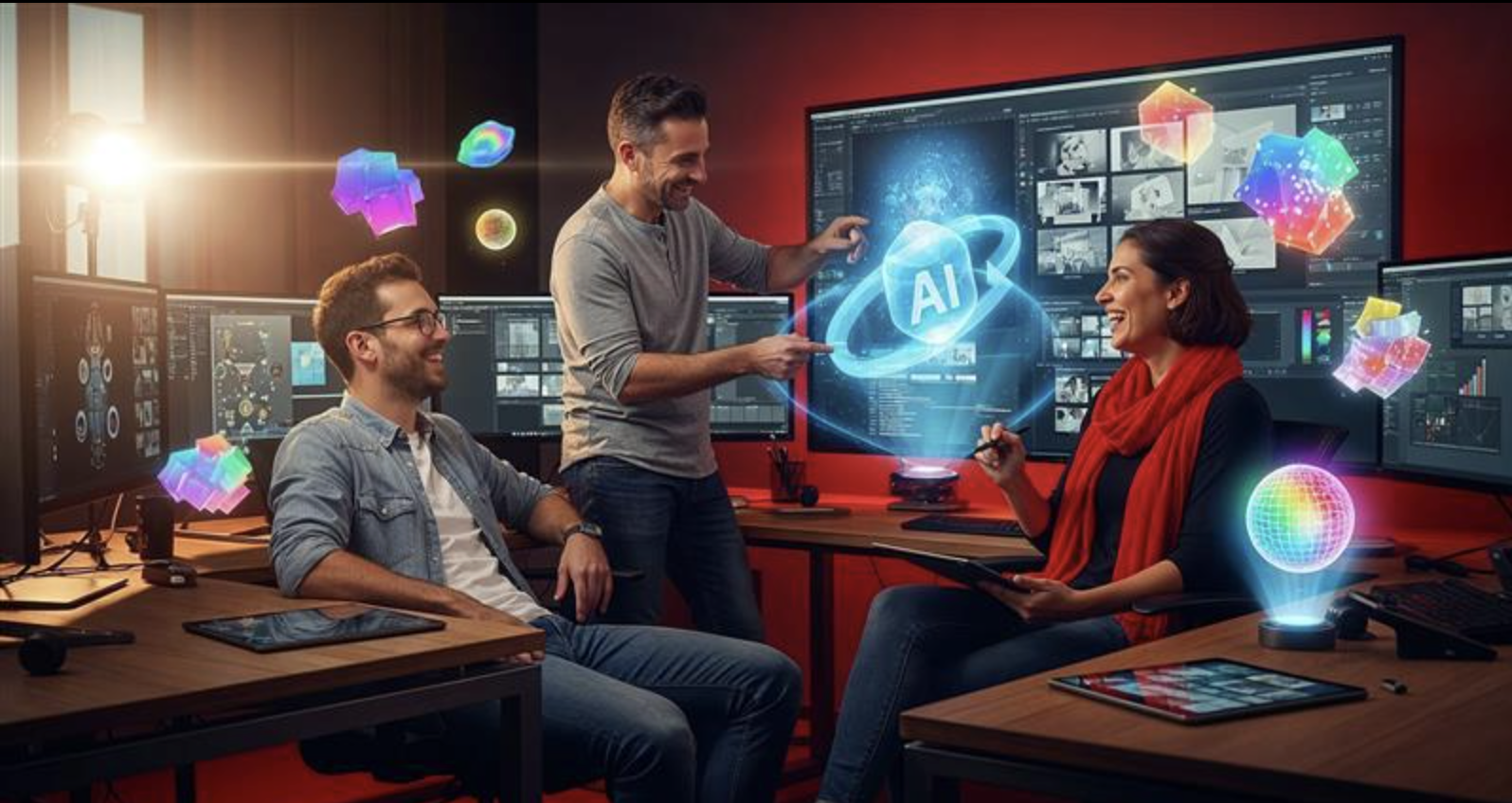
Advertising has always been a reflection of change. From newspapers to television, from outdoor media to digital platforms, every technological revolution has transformed the way brands communicate with consumers. Today, the advertising industry is standing at the edge of its biggest transformation yet, the rise of Artificial Intelligence. AI is not just another technology trend; it is becoming a powerful force that is changing how brands understand customers, how agencies create campaigns, how media is planned, and how the next generation of marketing professionals will work.
The conversation around Artificial Intelligence in advertising is no longer about whether AI will enter the industry. It already has. The real conversation is about how brands, agencies and creative professionals can adapt to this new era where human imagination and machine intelligence come together. The future of advertising will not be controlled by humans or machines alone; it will be shaped by those who understand how to combine the emotional power of creativity with the analytical strength of technology.
For decades, advertising agencies were built around human expertise, creative thinking, consumer insights, storytelling, design, strategy and execution. A campaign journey involved researchers understanding the market, creative teams developing concepts, designers creating visuals, filmmakers producing content and media experts finding the right platforms to reach audiences. Today, Artificial Intelligence is becoming a powerful partner in every stage of this process. It is helping brands analyse consumer behaviour, identify market trends, predict customer preferences, generate creative concepts, personalise communication and optimise campaigns with greater speed and accuracy.
Brands across industries are increasingly using AI to build stronger connections with consumers. In the past, brands created one communication message and delivered it to millions of people. The future is moving towards personalised experiences where every consumer receives communication based on their interests, behaviour and preferences. AI enables brands to create region-specific campaigns, personalised recommendations, dynamic advertisements and targeted brand experiences that feel more relevant and meaningful.
The biggest advantage of AI is the ability to process massive amounts of data in real time. Consumer behaviour that earlier took months of research can now be understood faster through intelligent analysis. Brands can identify what customers want, what motivates their decisions and what kind of communication creates engagement. This is helping marketers move from assumptions to insights and from broad messaging to precision marketing.
Creative production is another area where AI is bringing significant change. Earlier, creating multiple campaign variations required large teams, longer timelines and higher budgets. Today, AI-powered tools can help generate initial concepts, visual references, scripts, campaign ideas and creative directions within minutes. However, the true value of AI is not replacing creative minds but empowering them. When repetitive tasks become faster, creative professionals get more time to focus on the most important part of advertising — ideas, emotions and storytelling.
The media industry is also experiencing a major transformation. Media planning and buying, which traditionally depended on experience and historical data, are becoming more intelligent with AI-driven analysis. Brands can now understand which platforms, audiences and moments will create maximum impact. AI helps marketers optimise budgets, improve campaign performance and make smarter investment decisions.
However, this transformation is also creating challenges for traditional advertising and media agencies. The old agency model, where value was created mainly through manpower, execution and production, is changing rapidly. Today, brands are looking for partners who can offer speed, innovation, technology understanding and measurable business results. The agencies of tomorrow will not simply be creative agencies; they will become creative intelligence partners that combine imagination, data and technology.
The biggest question facing the advertising industry is whether AI will replace jobs. The answer lies somewhere between fear and opportunity. AI will definitely automate many repetitive tasks, but it will also create new roles and opportunities. The advertising professional of tomorrow will not only be a copywriter, designer or media planner. New-age careers will emerge around AI creativity, brand intelligence, data storytelling, prompt strategy, digital experiences and marketing technology.
The future creative leader will be someone who understands both humans and machines. AI can generate thousands of ideas, but it cannot completely understand emotions, cultural nuances, human behaviour and social context the way people can. A machine can create an image, but a human decides whether that image tells a meaningful story. A machine can analyse data, but a human understands why people make choices.
This is where the future of advertising lies not in replacing human creativity, but in enhancing it. The brands that succeed will be those that embrace AI while protecting the most valuable element of communication: human connection.
The next decade will witness the rise of AI-powered agencies, hybrid creative companies and specialised AI studios. Some organisations will build their entire creative ecosystem around artificial intelligence, while others will combine traditional advertising wisdom with advanced technology. The winners will be those who are willing to evolve.
For India’s advertising industry, this transformation represents a massive opportunity. With a young workforce, diverse consumer markets and rapidly growing digital adoption, India has the potential to become one of the most innovative advertising ecosystems in the world. Brands, agencies and professionals who understand AI today will have a significant advantage tomorrow.
The future of advertising is not a battle between creativity and technology. It is a collaboration between imagination and intelligence.
Because machines can create content, but only humans can create meaning.