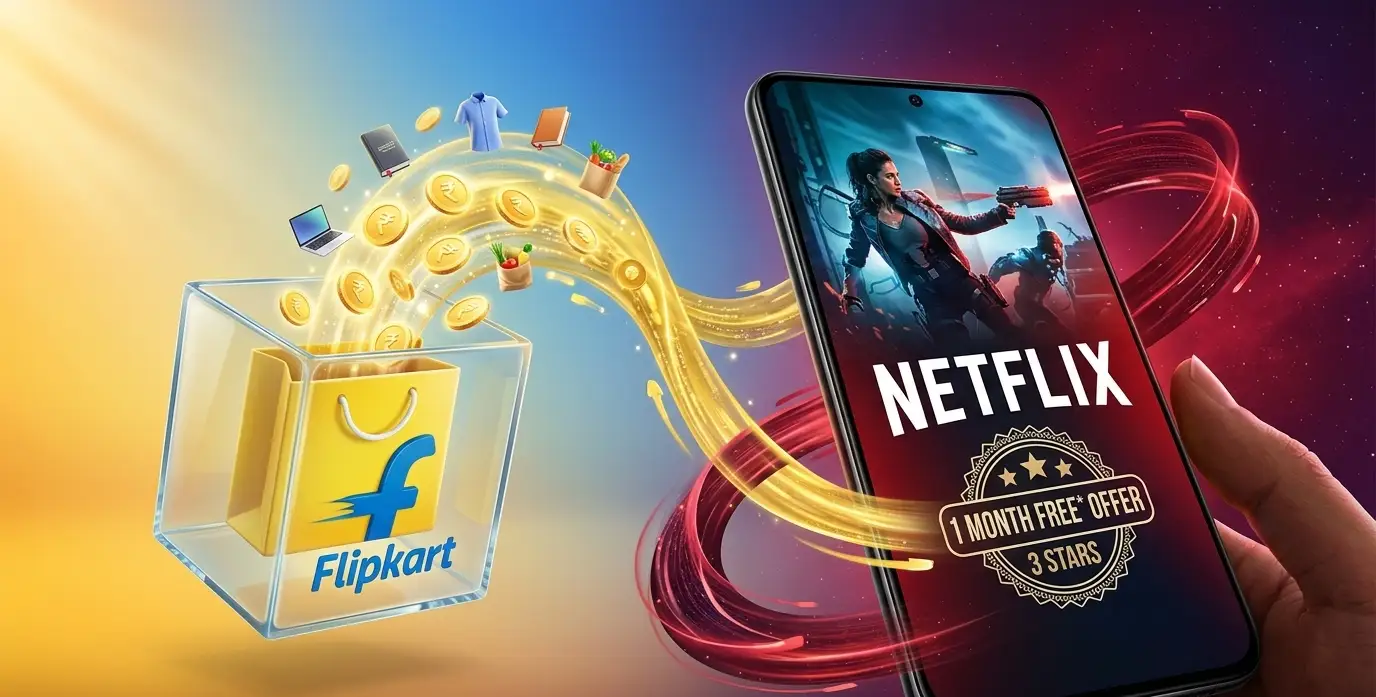
Brands today are moving beyond the traditional language of discounts, cashback and reward points. The new battleground is no longer just customer retention; it is emotional relevance. The Flipkart–Netflix partnership captures this shift perfectly, bringing together commerce and entertainment to create a deeper consumer connection. It reflects how modern loyalty is evolving from transactional benefits to lifestyle experiences that become a natural part of everyday behaviour.
Beginning August 1, Flipkart Plus members who complete four eligible orders worth ₹299 or more within a calendar month will receive a complimentary 30-day Netflix Mobile Plan. At first glance, it appears to be another customer reward. In reality, it is a carefully designed collaboration between India's largest homegrown e-commerce platform and the world's leading streaming service. one that reflects how brands are increasingly borrowing equity from one another to deepen customer relationships.
The significance of this partnership lies beyond the offer itself. It marks Netflix's first-ever collaboration with an e-commerce platform in India, expanding its distribution strategy beyond telecom bundles into everyday digital commerce. For Flipkart, the move transforms routine shopping into a lifestyle proposition, where groceries, essentials and quick-commerce purchases now unlock premium entertainment rather than conventional discounts.
This is where modern brand strategy is evolving. Consumers no longer distinguish sharply between shopping, entertainment and digital services. Their expectations are shaped by ecosystems, not isolated brands. The companies that succeed are those capable of connecting multiple consumer habits into a single, seamless experience.
For Flipkart, the partnership strengthens customer frequency rather than merely customer acquisition. By rewarding repeat purchases across Flipkart, Grocery and Minutes, the company is encouraging habitual engagement instead of one-time transactions. The objective is not simply to increase basket size, but to increase monthly customer interaction—a metric that has become increasingly valuable in today's subscription-led economy.
For Netflix, the collaboration represents an equally strategic play. Subscriber acquisition is becoming more competitive, and embedding its service within an existing commerce ecosystem introduces the platform to millions of high-frequency digital consumers without relying solely on traditional subscription marketing. Instead of advertising its product, Netflix becomes part of consumers' existing purchasing behaviour.
From an advertising perspective, this collaboration reflects a broader movement toward value partnerships. Brands are moving beyond media sponsorships and promotional tie-ups to create integrated consumer propositions where each partner strengthens the other's relevance. Loyalty is no longer being purchased through discounts; it is being earned through access, convenience and everyday utility.
The partnership also reflects the growing convergence of India's digital economy. Commerce platforms are becoming entertainment gateways, entertainment platforms are becoming customer engagement tools, and loyalty programmes are evolving into ecosystem strategies. As category boundaries continue to blur, collaborations like this are likely to become a defining feature of brand building rather than isolated marketing campaigns.
The Flipkart–Netflix alliance is not merely a promotional initiative; it is a blueprint for how modern brands will compete. In an increasingly crowded marketplace, competitive advantage will belong to companies that collaborate intelligently, extend their brand relevance beyond their core category, and create ecosystems where every customer interaction delivers value beyond the original purchase.
The future of loyalty, it appears, may no longer be measured in points collected but in experiences unlocked.