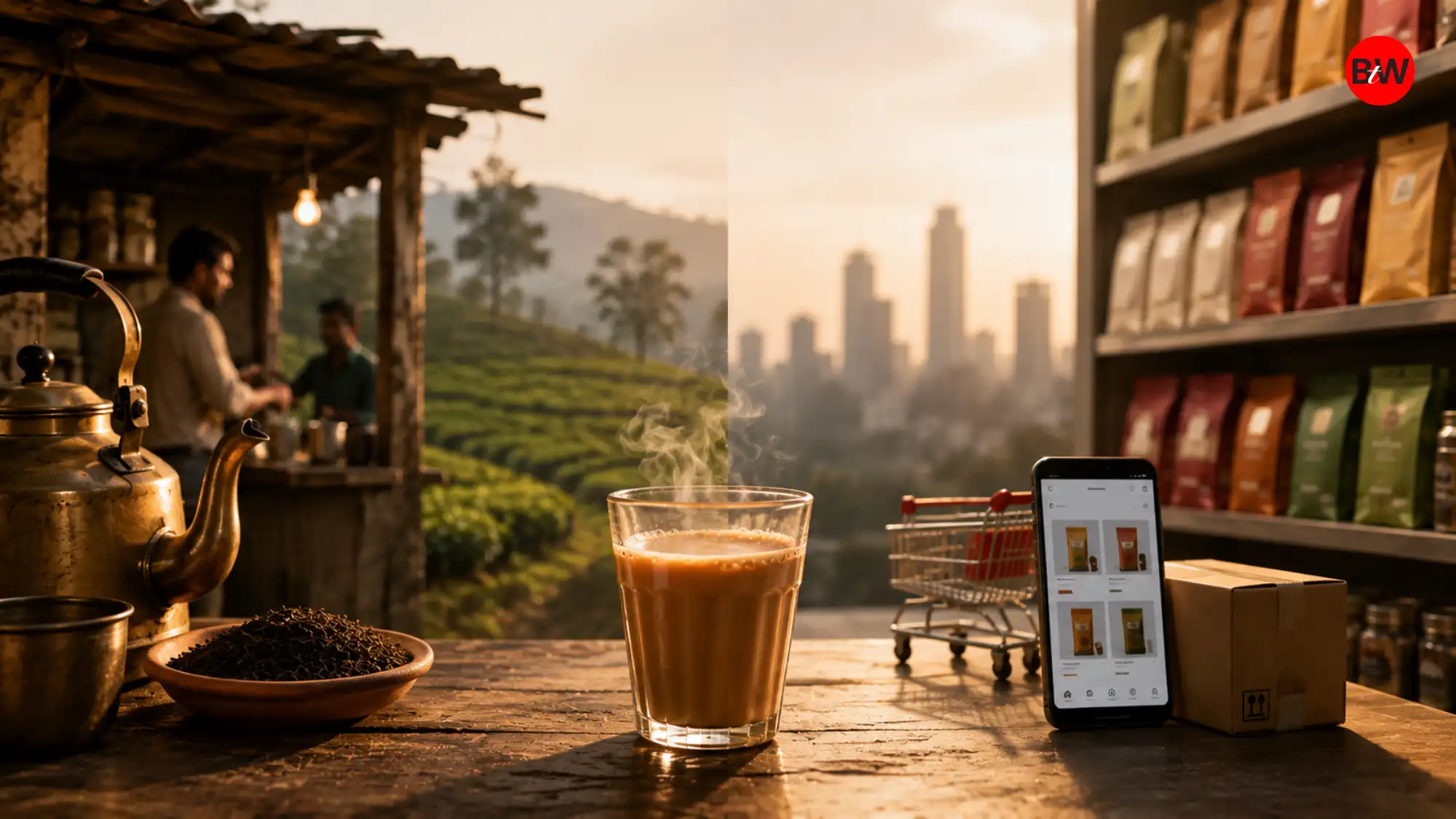
India does not just drink tea. India has a relationship with tea. It is the first cup of the morning, a conversation starter, a hospitality ritual, and for millions, a daily habit. That makes tea one of India's most interesting FMCG categories, not simply because of its size, but because of the emotion, habit, and regional taste built around it.
India is the world's second-largest tea producer after China, and one of the world's largest tea-consuming markets. India produced a record 1,382.74 million kg of tea in FY 2025-26. Assam alone contributes roughly half of the country's production. Yet the biggest tea brands are not necessarily located where the tea is grown. That tells us something important: tea is not only a commodity; it is a branding opportunity.
India Doesn't Have One Tea Market
There is no single “Indian taste” when it comes to tea. North India likes its chai robust. Gujarat has its own blend preferences. Maharashtra has a deep packaged-tea culture. Assam and Bengal have a natural connection with tea. South India brings tea into competition with a strong coffee culture.
This is why regional tea brands continue to matter.
A national brand can say “India's Tea.” & A regional brand can say “Your Tea.”
That difference is powerful.
The Real Competitor: Loose Tea
Before talking about brands, we need to talk about the biggest competitor to brands: loose tea. Loose tea still has a strong presence across India because consumers associate it with choice, freshness, flexibility, and trust. They can see it, smell it, select the strength, and sometimes even create their own blend. The opportunity for organised tea brands is therefore not simply to replace loose tea.
It is to offer: The trust of loose tea + the consistency of a brand. That could be one of the biggest opportunities of the next five years.
Why Regional Brands Matter
National brands have scale, distribution, and advertising power. Regional brands have something equally valuable: local understanding.
Wagh Bakri understood Gujarat before expanding beyond it. Society became part of Mumbai and Maharashtra's tea culture. Sapat built around regional taste and blends. Girnar moved from loose tea to branded tea by converting product trust into brand trust.
Their stories offer one common lesson: A regional brand doesn't need to become national to become powerful. It needs to become meaningful first.
The Consumer Doesn't Buy Tea. They Buy “Their Tea.” This is perhaps the biggest consumer insight in the category. People don't simply ask whether a tea is good. They ask whether it is their kind of good.
Strong enough? Aromatic enough? Right colour? Right price? Right for milk tea? Right for the family?
That is why tea brands are not only competing for market share. They are competing for taste memory. And once a particular taste becomes part of someone's morning routine, changing the brand is not easy.
National Brands Are Learning the Regional Lesson
The interesting shift is that national brands are increasingly behaving like regional brands.
The future is not simply: National Scale vs Regional Brand.
It is: National Scale + Regional Relevance.
The next generation of tea communication will need to understand local culture, local taste, local language, and local occasions. The national brand that talks to India as one market may lose to the brand that understands India as many markets connected by one habit.
What Will Change in the Next Five Years?
Tea will move in five interesting directions: premiumisation, provenance, wellness, convenience and digital discovery.
Consumers will increasingly want to know where their tea comes from. Assam, Darjeeling, Nilgiri and single-estate teas can become stories, not just origins. Wellness will create opportunities beyond green tea. Premixes, tea bags, instant and ready-to-drink formats will bring tea into new occasions. E-commerce and quick commerce will allow small regional brands to reach consumers far beyond their traditional geography.
This creates a rare opportunity: Regional → Digital → National.
A regional tea brand no longer needs a national distribution network to become nationally discoverable.
But there are threats: change, raw-material price volatility, private labels, intense competition, and brand clutter will make the category tougher. The biggest threat, however, may be simpler: Every tea brand is beginning to look and sound the same.
“Great taste. Premium quality. Freshness. Strong chai.”
These are category claims, not brand ideas.
Communication Has to Move From Claims to Culture
The next successful tea brand will not simply say: “Our tea tastes better.”
It will explain why this taste belongs to you.
That means moving from: Product → Consumer → Culture.
For regional brands, this is the moment to stop behaving like smaller versions of national brands. They should own what makes them different: their taste, their place, their people, and their story.
Agencies and branding companies will increasingly have to work beyond advertising: packaging, consumer research, digital storytelling, regional communication, quick-commerce visibility, sampling, and brand experience will all become part of the tea-branding ecosystem.
The Brand To Watch Insight
The tea category teaches us something much bigger about India: India is not one market. India is a market of markets.
- In Assam, tea is a crop.
- In Darjeeling, it is heritage.
- In Gujarat, it is blend and business.
- In Mumbai, it is habit.
- In North India, it is kadakness.
But across India, tea is one thing above all: Conversation.
That is why the next big tea brand may not be the one with the biggest advertising budget. It may be the one that understands one simple question better than everyone else:
“What makes this tea my tea?” because consumers may forget an advertisement. They rarely forget the taste of their chai and the brand that owns that taste in their memory.