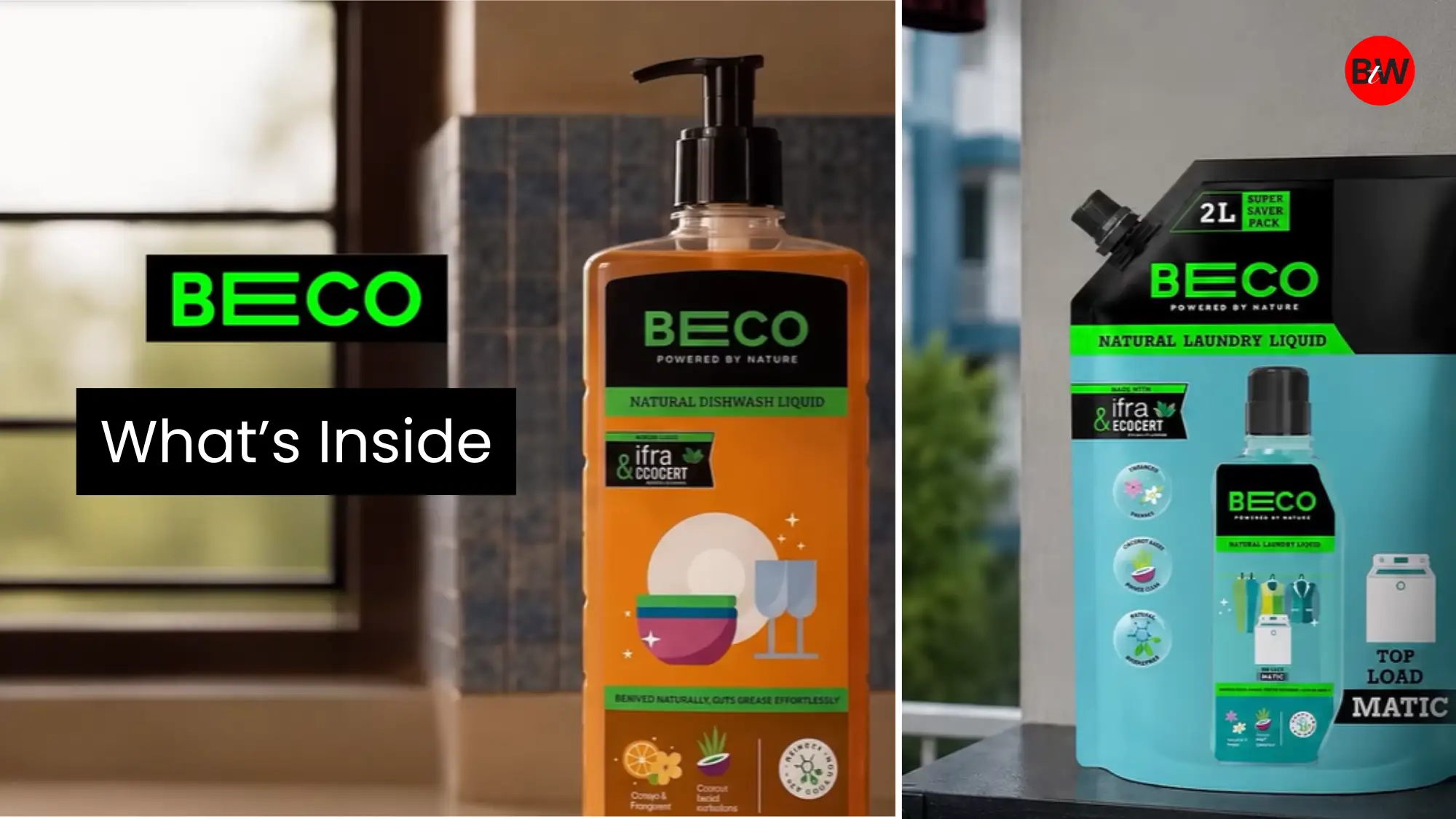
For years, home-care advertising has largely revolved around one promise: better cleaning. BECO’s latest campaign takes a different approach, shifting the conversation from what cleaning products can do to what they contain.
The campaign features two films, one comparing BECO Laundry Detergent with Surf Excel, and another putting BECO Dishwashing Liquid alongside Vim. Both use laboratory testing and ingredient comparisons to make a larger case for transparency in everyday home-care products.
The central idea is simple: consumers should know more about the products they use, rather than choosing them only because they are familiar names.
When Surf Excel’s “Daag Achhe Hain” Meets What’s Inside
In the laundry film, BECO directly references the familiar territory of Surf Excel’s “Daag Achhe Hain” before shifting the conversation towards the ingredients in the detergent.
BECO says it sent popular laundry products to an independent, third-party NABL-accredited laboratory for testing. According to the brand’s published findings, the tested Surf Excel Matic Liquid contained LAS above 10% and Benzisothiazolinone (BIT) at 277 mg/kg.
BECO says its own tested laundry product did not show the same ingredients.
The film therefore moves beyond the conventional detergent conversation of stain removal and cleaning power. Instead, it asks consumers to consider another aspect of the product: what goes into the formulation they are using every day.
The comparison ends with the direct line: “Jo Surf Excel mein hai, woh Beco mein nahi. Isliye switch to Beco.”
From “100 Nimbu Ki Shakti” to What’s Inside
The second film, “We Lab-Tested Your Dishwash Liquid | Time to Switch to BECO,” takes the same strategy into the dishwashing category, this time putting Vim Liquid in the spotlight.
The film draws on Vim’s familiar “100 Nimbu Ki Shakti” proposition before changing the focus from cleaning strength to ingredients.
BECO says popular dishwashing liquids were tested at an independent, third-party NABL-accredited laboratory, where ingredients including LAS and Isothiazolinone were identified. According to BECO’s published findings, the tested Vim Dishwash Gel showed LAS above 8%.
The film closes with another direct comparison: “Jo Vim mein hai, woh Beco mein nahi. Isliye switch to Beco.”
Rather than simply claiming that BECO cleans better, the brand uses the comparison to make consumers question what they know about the products sitting in their kitchens.
A Challenger Brand Choosing a Different Battlefield
Calling out two of the most familiar names in home care is a bold strategy for a challenger brand.
BECO could have competed with Surf Excel and Vim on traditional territory: cleaning performance, fragrance, convenience or efficacy. Instead, it is attempting to establish a different conversation around ingredients, formulation and transparency.
That makes the campaign less about saying “we clean better” and more about asking: “Do you know what you’re cleaning with?”
The approach also gives BECO a consistent platform across two different categories, allowing the brand to build a broader positioning around ingredient-conscious home care.
A key part of BECO’s communication is its repeated emphasis on laboratory testing. Rather than presenting its ingredient claims as simple advertising assertions, the brand says its comparisons are backed by testing conducted at an independent, third-party NABL-accredited laboratory. This proof-led approach gives the campaign its central narrative: look at the evidence, understand what is inside the product, and then make a choice.
However, laboratory findings need to be interpreted in context. The presence of a particular ingredient does not, by itself, establish that a finished consumer product is harmful when used as directed. Concentration, formulation, exposure, intended use, and applicable safety standards are all relevant when assessing the safety of a finished product.
The directness of the campaign also brings greater scrutiny. Hindustan Unilever has challenged BECO’s campaign before the Delhi High Court, disputing the conclusions drawn from the testing and raising allegations including commercial disparagement and trademark-related violations.
This adds another dimension to the campaign. What begins as a brand comparison becomes a broader conversation about how far comparative advertising can go, what evidence is required to support product claims, and how consumers should interpret ingredient-based messaging.
BECO Wants Consumers to Look Beyond the Label
The most interesting part of the campaign is the territory BECO is trying to create. Home-care advertising has traditionally told consumers about stains, grease, fragrance, freshness, and cleaning power. BECO is asking them to add another question to the decision-making process: What’s inside?
By bringing Surf Excel and Vim into the conversation, the brand has made that question harder to ignore. For a challenger brand, the strategy is clear: don't simply compete with established players on the benefits they already own. Change the question consumers are asking. And that may be the real idea behind BECO’s latest campaign, turning the contents of a cleaning product into as much of a consideration as what the product promises to clean.