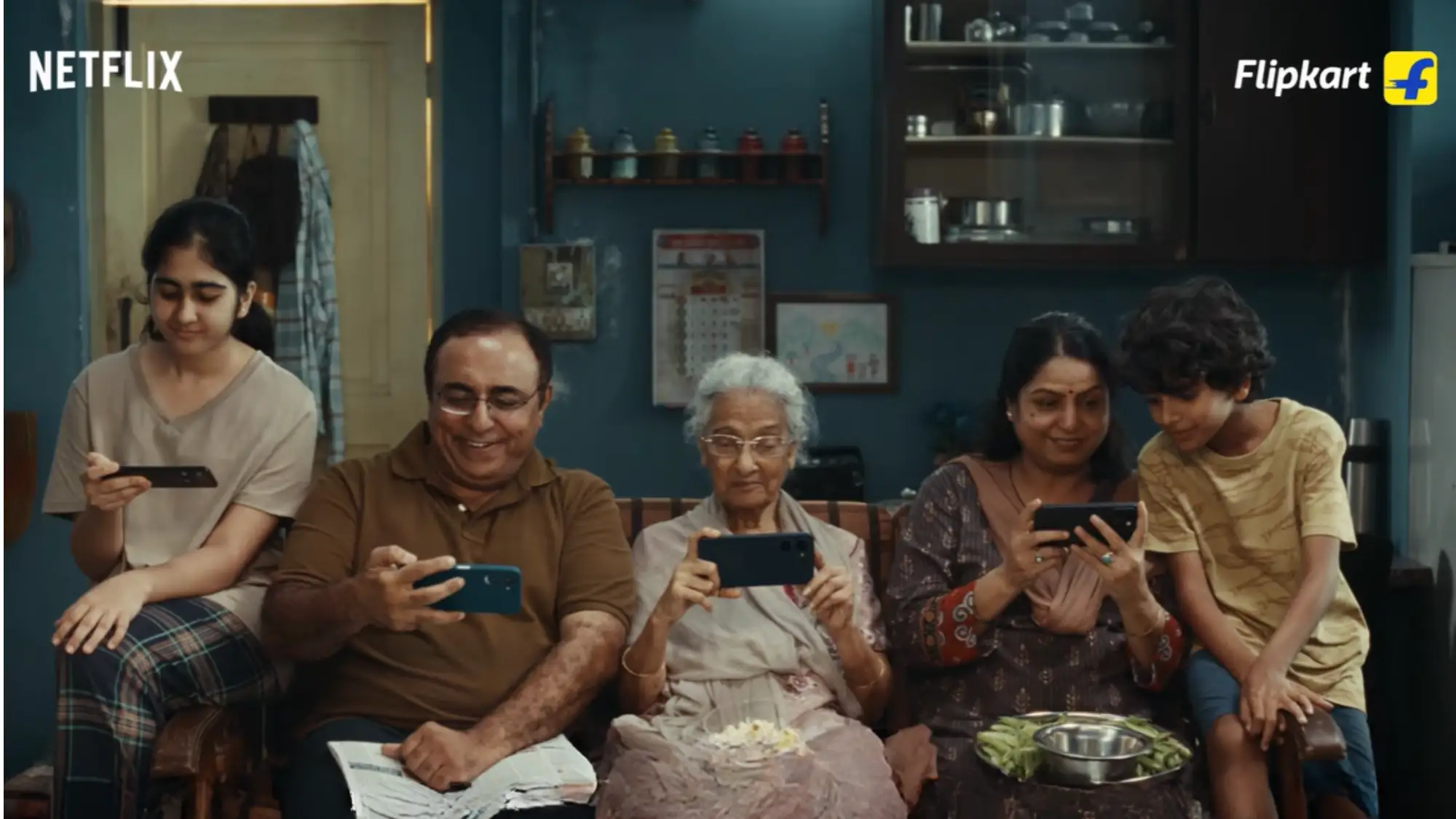
What if your neighbours treated your family drama like their favourite TV show? Flipkart and Netflix explore this familiar slice of Indian neighbourhood life in their latest campaign, “Entertainment Ka Pardah”, turning everyday curiosity into a humorous story about privacy, entertainment and the joy of watching someone else's rishta unfold.
When a Rishta Becomes a TV Episode
The film opens with a family sitting by the window, closely watching a marriage proposal happening in the neighbouring house. But they aren't simply observing. They are reviewing the match like television critics.
“Do you think this is a good match?” one asks, while another quickly judges the prospective bride and groom. They compare the current proposal with the “boy from the last episode”, commenting on his screen presence and even his earnings.
The conversation becomes increasingly invested, with the family discussing details that only someone watching from very close could possibly notice. One family member even points out that the prospective groom is the number one agarbatti salesman in their area, adding another layer to their unsolicited analysis.
The Neighbours Have Their Own Review Panel
The humour comes from the way the family treats someone else's marriage proposal as episodic entertainment.
They don't just watch the proceedings; they debate the characters, compare previous “episodes” and even investigate whether someone is telling the truth. When one person gets too close to the window, another warns him about the danger before the conversation immediately returns to the ongoing drama.
The film turns the familiar habit of keeping tabs on the neighbours into a full-fledged entertainment experience.
What Happens Behind the Curtain
The campaign then flips the perspective. The people inside the house are unknowingly providing entertainment for the family watching them from outside. Their private moments have effectively become a live show for the neighbourhood.
The film's closing thought captures this idea: “To save their home from becoming the entertainment of others, Flipkart and Netflix have brought this screenplay.”
The proposition then takes a playful turn: the campaign suggests a way to give the people inside their privacy while giving the people outside “real entertainment.” And that entertainment comes through Netflix.
From Watching Neighbours to Watching Netflix
The campaign connects this humorous neighbourhood insight directly to the Flipkart-Netflix partnership.
Its proposition is simple: instead of relying on whatever happens to be unfolding next door, consumers can have access to actual entertainment through Netflix by shopping on Flipkart.
The campaign promotes the “Shop to Stream” proposition, where eligible Flipkart Plus members can earn a Netflix Mobile Plan after completing four qualifying orders of ₹299 or more in a calendar month across Flipkart, Flipkart Grocery and Flipkart Minutes. Once the required orders are completed, the Netflix Mobile Plan can be activated through the Flipkart app for the following 30 days. The strength of “Entertainment Ka Pardah” lies in how naturally the brands build their proposition around a recognisable behaviour.
Instead of starting with Netflix shows or a conventional shopping offer, the film starts with something much closer to everyday Indian life, neighbours being far too interested in each other's business.
The marriage proposal becomes the “show”, the neighbours become the audience, and the window becomes their screen. The campaign then uses this setup to make a simple point: there is plenty of entertainment available without turning someone else's private life into your source of it.
The partnership turns the joke into a product benefit. Flipkart gives consumers a way to shop, while Netflix gives them something better to watch.
With “Entertainment Ka Pardah,” Flipkart and Netflix take a familiar neighbourhood habit and build an entertaining brand story around it, proving that sometimes the best way to stop watching the neighbours is simply to have something better to watch.